
Breakout trading is a trading technique that a trader may use to enter the market after price has broken above or below a key support or resistance level, in order to enter the beginning of a new trend. Instead of attempting to guess where the market is headed, breakout traders react to a confirmed momentum and ride the move at an early point in time. Stay with us to get more information about this Forex trading strategy.
Understanding Breakouts in Trading
A breakout strategy is based on one simple fact: wait for the market to show its hand and then take advantage of the situation. When a breakout occurs there has been an escape from a defined range formed by the support (or floor) and resistance (or ceiling) levels. The shifts after breakout typically indicate:
- An increase in volatility
- Strong market participation
- The beginning of a new trend
How Does a Breakout Strategy Work?
Traders who employ breakout trading look to enter into an established new trend when the price crosses a significant support or resistance level. Rather than rely on their own intuition about future market direction, breakout traders simply respond to previously established momentum and take an early position in that direction.
The reasoning behind it is simple yet very effective. We are going to share the Step-by-Step process with you.

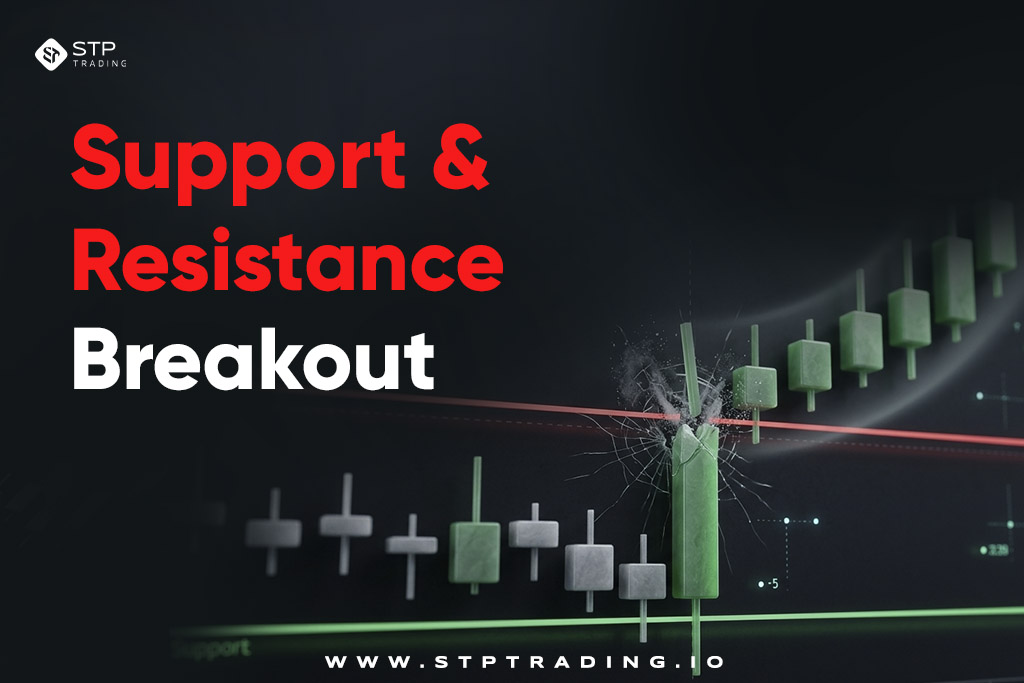
Recognizing the Support and Resistance Levels
Shrewd traders employ implementations like analysis tools to pinpoint main levels and to validate the strength of the breakout. Determining where price has historically been rejected from or supported is the basis of any breakout strategy.
- S → Area where the price has stopped going lower (support)
- R → Area where the price has stopped going higher (resistance)
Those 2 levels form your price range, and the longer price remains inside of that range, the more likely that a breakout will occur. Also, many traders are able to verify those levels are exact by use of professional trading resources.
Wait for Price Consolidation
The tighter the range of prices, the stronger a breakout would be. That consolidation phase would represent:
- Accumulation (the number of orders to either sell short or buy in has built)
- Potential (strong movement could happen out of that consolidation)
Watch for the Breakout Signal
A breakout happens when price breaks through support or resistance levels with a lot of force. Major signs to pay attention to:
- Strong bullish or bearish candle
- Increased trading volume
- Clear close outside the range
Confirm the Breakout (Avoid Fakeouts)
Not every breakout is genuine. That’s why many traders become victims of false breakouts (fakeouts). To recognize true breakouts you could keep an eye on news and volatility triggers which is a great way to stay away from trading during unpredictable events.
Enter the Trade at the Right Moment
After the breakout has been confirmed, it’s your time to enter the market:
- Purchase once resistance is breached
- Sell once support is broken
- Some traders decide to get in right after breakout
Risk Management and Setting Stop-Losses
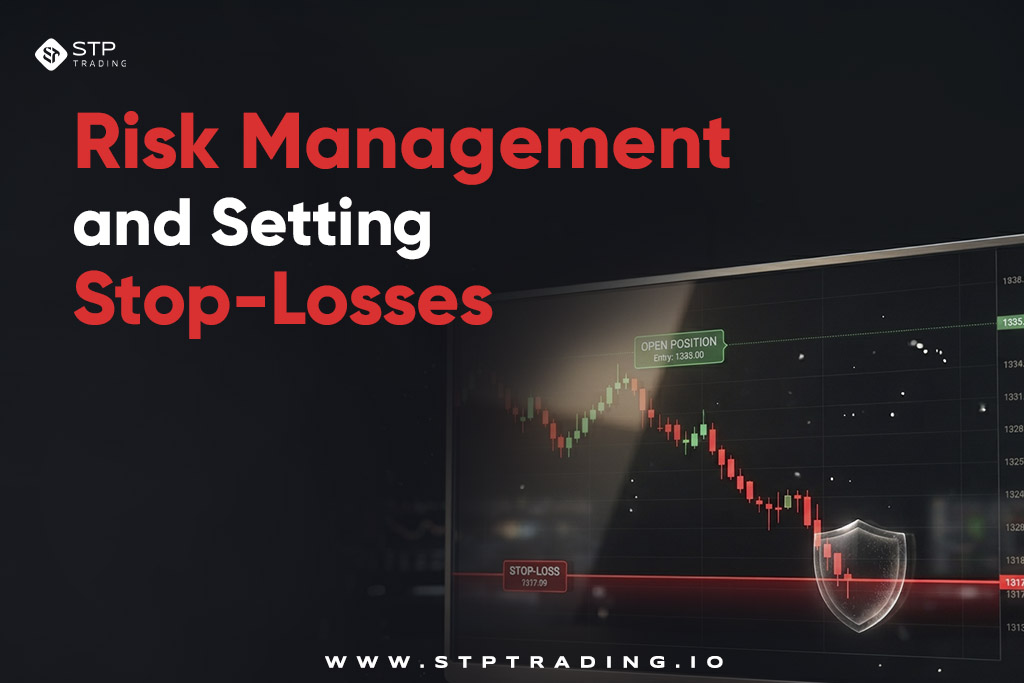
In terms of risk management strategy, professional traders can be distinguished from less experienced traders by two characteristics. They set stop-losses:
- On buy trades, a stop-loss is set below the breakout point
- On sell trades, a stop-loss is set above the breakout point
- They keep an appropriate risk-reward ratio (for example, 1:2 or better)
Monitoring and Managing Forex Trades
Professional traders use the different types of tools to assist them in making decisions about executing their trades. They also will use advanced trading analytics and tools to evaluate their performance and streamline their execution of trades. After executing a trade, the trader:
- Will move their stop-loss closer as price increases in line with their expectations
- Will lock in some profit as price approaches key resistance levels
- Will not exit prematurely unless their trading signals weaken
Evaluate and Develop New Strategies
There is no learning opportunity for a trader that cannot be used to improve upon their trading methodologies. By evaluating all trades executed by the trader (winners and losers), the trader gains value from the following:
- Identifying errors
- Updating entry or confirmation criteria
- Traders can also improve their decision making by utilizing predictive and market insight tools
Types of Breakouts
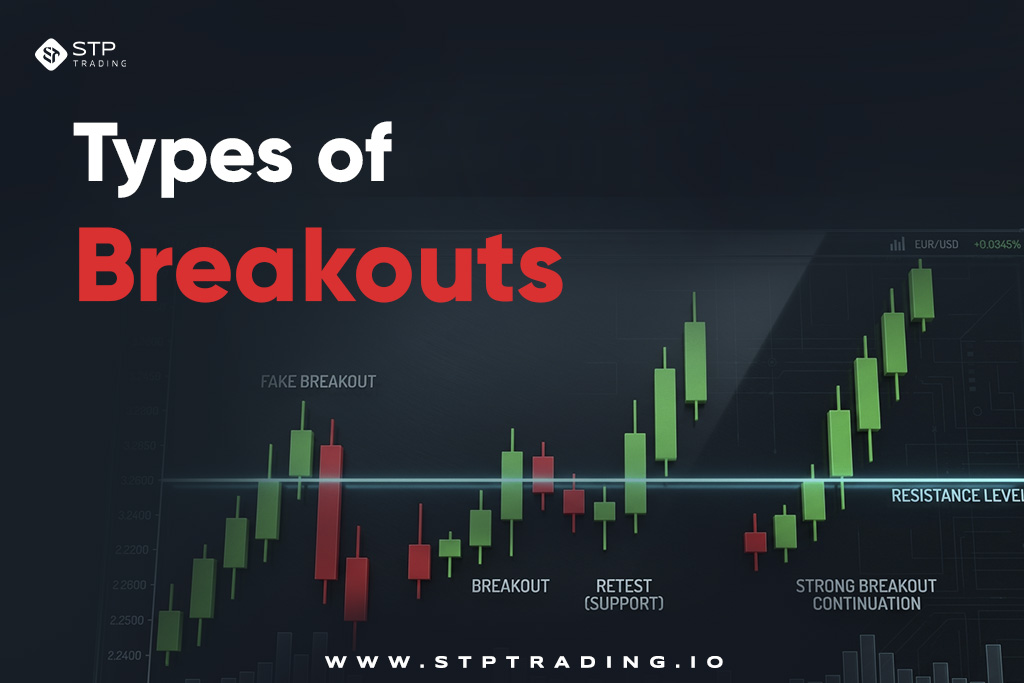
There are several types of breakouts, which depend on the market, the trader, and the momentum. The idea behind the breakout is the same. The prices move out of the range, but the reason behind the breakout differs.
Sometimes the breakout is in the direction of the existing trends, while at other times the breakout might indicate a reversal. Sometimes the breakouts occur due to sudden volatility. Therefore, the knowledge of the types of breakouts is very important, as it helps the trader make the right decision while trading, instead of going into the trade blindly.
Continuation Breakouts
These types of breakouts occur when the price breaks out in the direction of the prevailing trend. Example: An uptrend makes a halt, then breaks out higher, suitable for trend followers and more likely to be correct.
In a trending market, prices tend to stop and move sideways or range-bound for a while, a consolidation period. During a consolidation period, the price is merely fluctuating or moving sideways because of a balance of both buyers and sellers. When a breakout happens:
- Buyers take control in an uptrend
- Sellers take control in a downtrend
In an uptrend:
- Prices move up
- Prices then consolidate or range-bound in a small range
- Prices then break above resistance and move up
Reversal Breakouts
Often occurs in combination with the Head & Shoulders pattern. Confirmation is necessary for this type of breakout. For example, an uptrend may form a Head & Shoulders pattern which then breaks below the “neckline,” resulting in a downward reversal from an uptrend.
It will confirm that price has clearly broken the targeted breakout level with a high probability.
The price has moved significantly beyond the breakout level. Calendars or other indicators may also provide confirmation of the price breakout direction.

Volatility Breakouts
This type of breakout happens when the price breaks out during a period of low volatility. Example: The price makes an explosive move. This happens when the Bollinger Bands Squeeze occurs
Volatility breakout patterns are naturally recurring patterns as markets cycle through periods of low volatility followed by high volatility, typically caused by either a supply and demand imbalance created by a news event or other factors that would create very large and ongoing price swings in rapid fashion.
News-Based Breakouts
This type of breakout happens when news affects the market. Example: The price makes a volatile move due to news events. News-based breakouts take place when economic events or major announcements lead to sudden and sizable price changes.
Example: Market is stable before a news release, Key economic data is released, Price breaks support or resistance with strong momentum, Very hard to predict higher risk of slippage and spread.
Reasons Breakout Trading Is So Popular
The breakout trading strategy is particularly effective in the Forex markets where price tends to consolidate prior to major price movements occurring.
- Entry points are easily identifiable
- Can be used in Forex, stocks, cryptocurrencies
- Can make large price moves
- Reduced emotional aspect of trading

Types of Breakout Strategies
When trading breakouts, there’s not just one strategy or method of entry into the market. There’s so many variations and sometimes you have to adjust for market conditions. Professionals typically use 3 main strategies for breakout trading.
These are the strategies that best fit the professional trader and their style, which are each designed to capture a momentum from the market in different ways. Understanding the difference in breakout strategies will help you adapt to any change in market conditions and help improve your overall consistency.
Support & Resistance Breakout
The most widely used strategy. Range-bound markets are the best conditions for the strategy. This is the most common way to use breakout trading, especially for beginner traders, and it is typically built around a very well-defined price level.
Price tends to move between support and resistance. Trading R/S breakouts can be done through:
- The price breaks out of the resistance (buy signal).
- The price breaks out of the support (sell signal).
The concept is very simple, but when you take into consideration that when the price does eventually break out of the current price range, it has a very high chance of continuing to move in the same direction because of the pressure that is built up and the fact that traders have become trapped. In sideway markets:
- Price is being tested over and over again at support and resistance.
- There is an accumulation of liquidity above and below support and resistance levels. Get to know how Forex liquidity affects your trade.
- A breakout can be a release of that pressure; thus creating big moves in price.
Helpful tips for using this breakout strategy:
- Wait for the close of a strong candle above or below the identified price level.
- Do not trade on weak or low volume breakouts.
- Watch for retests of the breakout price.
Momentum Breakout Strategy
The momentum breakout strategy is based on the idea that price movement involves speed and not just the level price reaches. A breakout without momentum is a false move. This necessitates traders use momentum indicators to decide whether or not to take a breakout trade.
Momentum acts as a sign that you can combine momentum signals with real-time data. Principal indicators:
- RSI
- MACD
- Volume indicator

Chart Pattern Breakouts
Chart patterns are a more advanced breakout strategy as they make use of technical chart formations. These patterns reflect the fluctuations in market participants’ psychology and hence, their break usually results in substantial price rise.
High-kick off and high-speed trading is often the result of breakout price from a pattern. This is an advanced breakout strategy that is based on the technical formations of the chart patterns.
These patterns show market psychology and often result in a strong price movement after they have been broken. Patterns provide information about:
- Accumulation or distribution price action
- The buying pressure or selling pressure on the price
- The potential direction of the price movement following an earlier breakout
Once a price has broken from a chart pattern, it generally has a high probability of also having a strong momentum to break through subsequent resistance or support levels. There are various chart pattern formations that can lead to explosive moves in the market.
Chart Pattern Types
Examples include:
| Chart Pattern Type | Definition | Various Styles | How to Trade |
|---|---|---|---|
| Triangles | A triangle pattern is formed when the price of a financial instrument is gradually compressed between 2 converging trendlines. |
|
|
| Flags | Flags are continuation patterns that generally follow a large price move. |
|
Wait for the price to break above or below the flag to enter a trade based on the previous trend direction. Assume that the market is only taking a pause from its existing trend before continuing its move. |
| Head and Shoulders | A reversal pattern that indicates the existing trend might change direction. |
|
|
Swing Trading Breakout Strategy
Swing traders employ the breakout strategy to benefit from medium-term price movements.
- Identify breakout on higher timeframe (H4 or Daily)
- Enter the market after breakout confirmation
- Hold the trade for several days or weeks
Key advantages:
- Less screen time
- More reliable breakout signals
- Larger potential profits
What Is the Swing Trading Breakout Strategy?
The Top Indicators to Use for Breakout Trading Indices
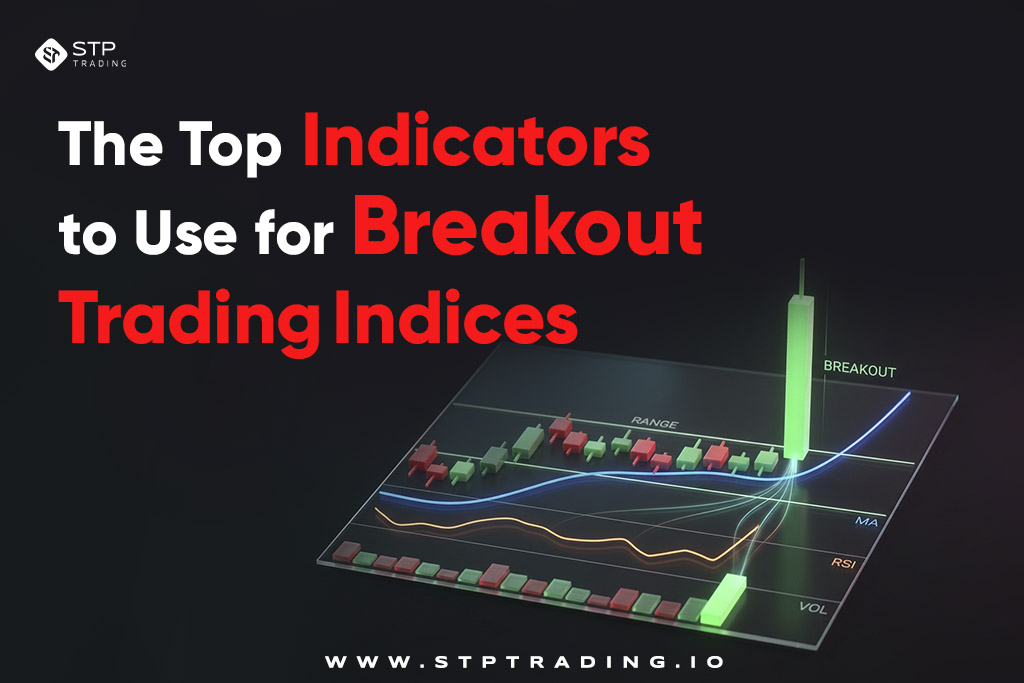
Identifying breakout trades also requires complementary indicators to reduce the chance of false signals. The following are the most common indicators used with breakout strategies:
- Volume Indicator: provides confirmation of strength
- Bollinger Bands: identifies a volatility squeeze
- Moving Averages: indicates trend direction
- ATR (Average True Range): measures volatility
You can access all 4 of these breakout indicators through STP Trading indicators for improved accuracy and execution. Utilization of advanced trading tools can help reduce risk and execute better.
How to Confirm a Breakout?
Many breakouts turn out to be false breakouts; however, you can identify a strong breakout those ones that have more potential for success if:
- The candle closes strongly outside of the breakout level
- The volume is increasing significantly
- There was a retest of the breakout level, providing confirmation
- The breakout aligns with the current trend
You can stay up-to-date on the events which impact breakouts by using the economic calendar.
Breakout Strategy Win Rate
If the value of the Euro against the USD is trading in a range of 1.1000/1.1050. The price breaks out of the range with high trading volume. The trader enters into a long position. The win rate is influenced by:
- Market conditions
- Strategy rules
- Risk management
- Typical Win Rate: 40% to 60%
Breakout strategies can be profitable even with a lower win rate due to:
- Reward/Risk Ratio
- Larger winning trades
Breakout Trading Compared with Other Trading Strategies
Breakout trading always involves trading with price movements. Other trading strategies may involve trading in the range or trading with the expectation of price movements.
| Trading Strategy | Concept of Trading | Best Conditions Suitable for Trading |
|---|---|---|
| Breakout Trading | Trading price leaving a range | Volatile Markets |
| Trend Following | Follow the Trend | Strong Trends |
| Range Trading | Buy Low and Sell High in a Range Market | Sideways Markets |
| Scalping | Small Profits | Highly Liquid Markets |
Risk Management in Breakout Strategy
Breakout trading can be very effective but at the same time this type of trading can be quite risky if you don’t have proper control. Moreover, breakout strategy is indeed one of the top trading strategies in the Forex market, one of the easiest and best beginner-friendly strategies because it starts practicing via a demo or low-risk account offered.
Here are some of the smart risk rules:
- Protect your account by using an anti margin call system.
- Combining breakout with hedge in negative margin
Pros and Cons of Using Breakout Trading Strategies
| Trading Strategy | Concept of Trading | Best Market Conditions |
|---|---|---|
| Breakout Trading | Trading when price breaks out of a range or key level | Volatile Markets |
| Trend Following | Trading in the direction of the overall market trend | Strong Trending Markets |
| Range Trading | Buying at support and selling at resistance within a range | Sideways Markets |
| Scalping | Making small profits from quick trades | Highly Liquid Markets |
What to Be Aware of Before Trading a Breakout
If you want to be successful trading breakouts, it is important to do more than just rely on price level alone.Enhance your ability to make good trading decisions by considering some points. Important factors to identify:
- Volume confirmation: Is there strong volume supporting this breakout?
- Market context: Is it trending or range bound?
- Timeframe alignment: Higher timeframe = stronger breakout.
- Important news: Can deny or give confirmation to the setup.
What Is a False Breakout?
Usually, a false breakout or fakeout is when the price briefly moves beyond a trading level but then quickly turns back. A false breakout usually takes place when there is not enough momentum or market participation, hence the failure of the breakout.
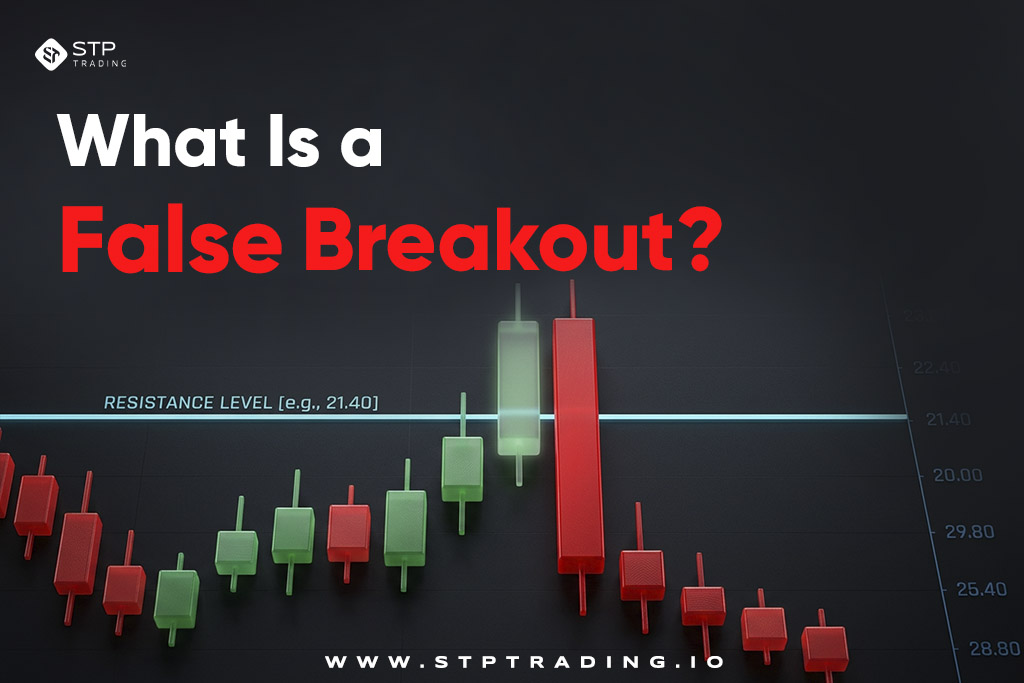
In most situations, false breakouts are often used by traders as a form of market manipulation, where traders try to drive the price through a significant level, hence triggering a series of stop-loss orders. False breakouts occur due to:
- Lack of sufficient trading volume
- Lack of sufficient momentum or market participation
- Sudden information or market uncertainty
- Stop-loss hunting by traders
to identify a false breakout:
- The price does not close through the significant level
- The breakout is not accompanied by sufficient momentum or volume
- The price immediately reverses direction after breaking through a significant level
- The breakout is not accompanied by sufficient momentum or volume
What Is a Fake Breakout in Forex and How to Avoid It?
Breakouts in Futures Markets
Breakout trading is popular in the futures market due to high liquidity and volatility. This strategy works in the Forex market future:
- High institutional trading activity
- High leverage opportunities available
- High market volatility
Besides Forex, other futures markets like oil and S&P 500 index are popular for breakout trading. Also after gold analysis in the Forex market, you can understand gold is under breakouts options’ effects too.
Breakout trading in the futures market has the potential to generate high profits but also involves high risks if risk management is not done properly.
Mistakes when Trading Breakouts
The following list consists of the most frequent mistakes made by traders when trading breakouts:
- Entering trades before getting confirmation that the breakout is valid
- Ignoring market news that could affect the outcome of a trade
- Trading breakouts in low volume
- Not adding a stop-loss to their trades
- Overtrading every breakout
Use STP Trading predictions to filter for high-probability setups.
How to Turn Stop Trading into a Winning Strategy
A breakout trading strategy consists of knowing the market’s behavior when the price has broken out of a range to identify the location of opportunities. Waiting for market confirmations is important when operating beyond price levels of a breakout direction because that will help you identify the best opportunity. To execute on your strategy, you must:
- Wait for your respective timeframe to get in the market and wait for price to clear its corresponding range to identify your entry point.
- Manage your risk by effectively using different risk management strategies.
- Use the right tools: Studies suggest that traders using advanced data analytics, trading platforms, etc., help them realize their profit potential versus traders not using advanced technology tools.
- Maintain discipline; therefore, having an environment that is conducive to professionalism goes a long way with breakout strategy trading.
Turning Market Moves into Consistent Results
While a breakout approach is not solely dependent on recognizing a situation where the price has broken out of a range, it also depends on understanding what this really means. Trading breakouts requires patience and precision.
There are always opportunities being created by the markets. However, it is up to the trader to take full advantage of this by being disciplined and selective. One must also remember that there are no perfect systems.
There are false breakouts, unexpected news announcements, and even noise. However, it is up to the trader to take the right approach by being able to adjust and learn from their mistakes.
If you are really serious about improving your trading performance, now is a good time to join STP Trading and begin trading breakout strategies.
Some Commonly Asked Questions Related to Breakout Trading Strategies
Which timeframes work best for breakout trading?
Although breakout strategies will work on all timeframes, the most reliable times on hourly, four-hour, and daily charts.
What are some ways to manage risk when executing breakout strategies?
When making breakout trades, wait for the closing candle past the breakout point and confirm the validity of the breakout with volume, then enter the trade after the breakout has begun to retest the breakout point.
Is breakout strategy good for scalping or using breaking reserves?
Yes, although the opening range breakout may work better than using breakout strategies with other types of trading.
Can breakout strategy be automated?
Yes. Traders commonly use bots or algorithms to identify breakout situations automatically.
Do news events affect breakouts?
Certainly. Major news can lead to strong breakouts. You should always keep an eye on the economic calendar.
What is the best currency pair for breakout trading?
Highly liquid pairs such as EUR/USD, GBP/USD, USD/JPY usually have cleaner breakout patterns.


 Telegram Support
 WhatsApp Support
 Live Chat

Excellent strategy! This breakdown of a breakout strategy will be useful for my own Urdu & Punjabi Speaking Mortgage Broker business.